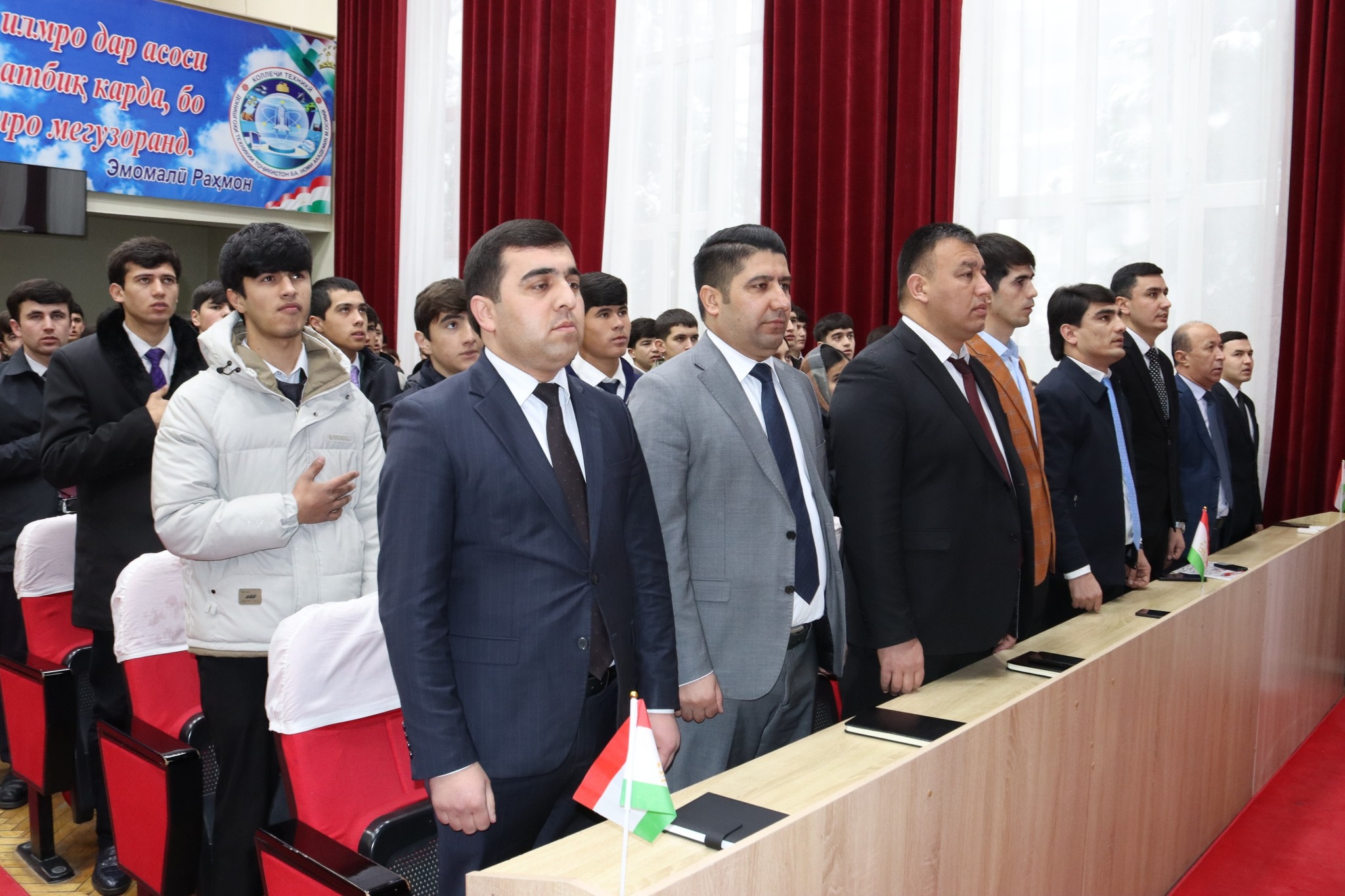
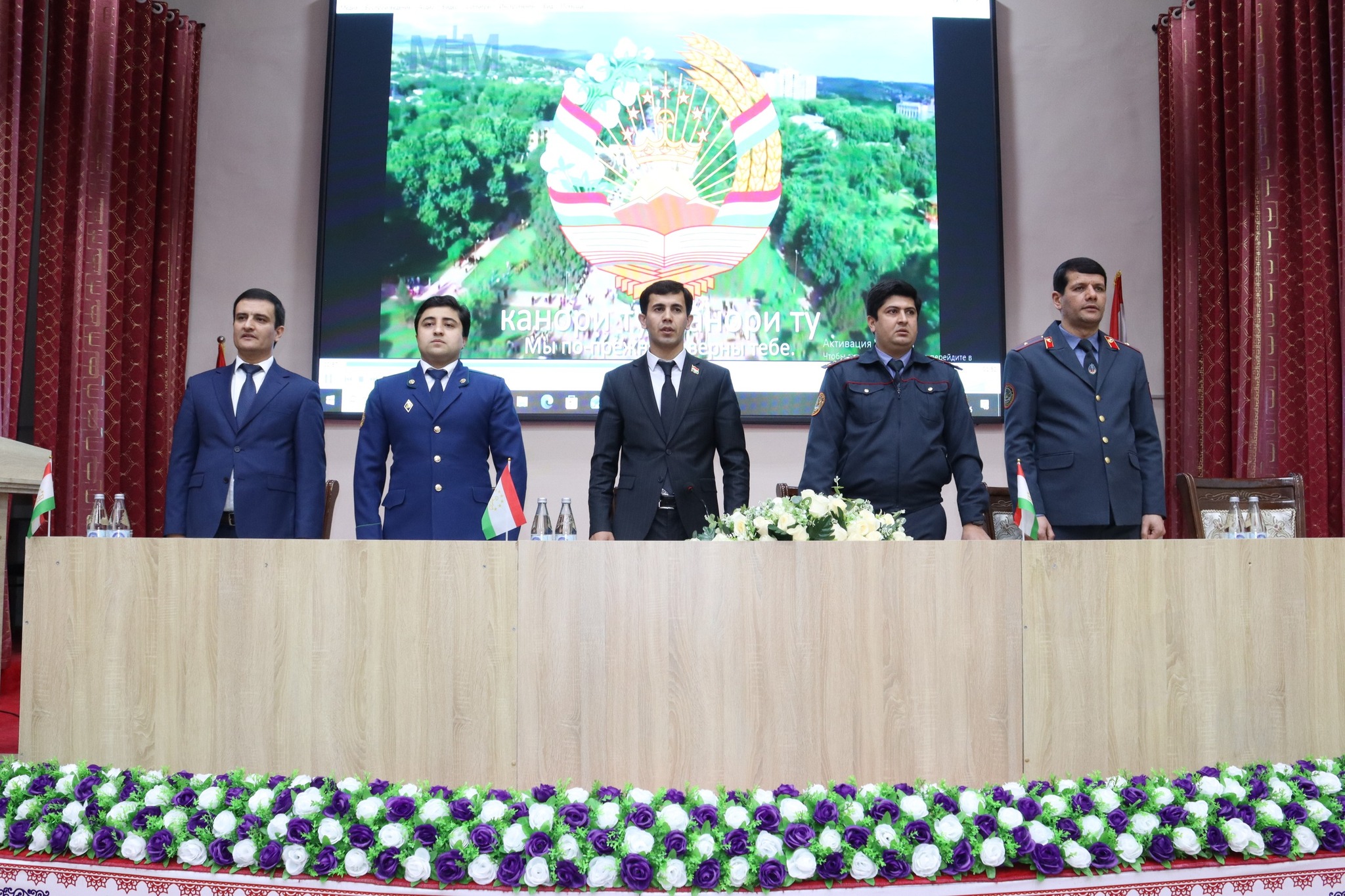
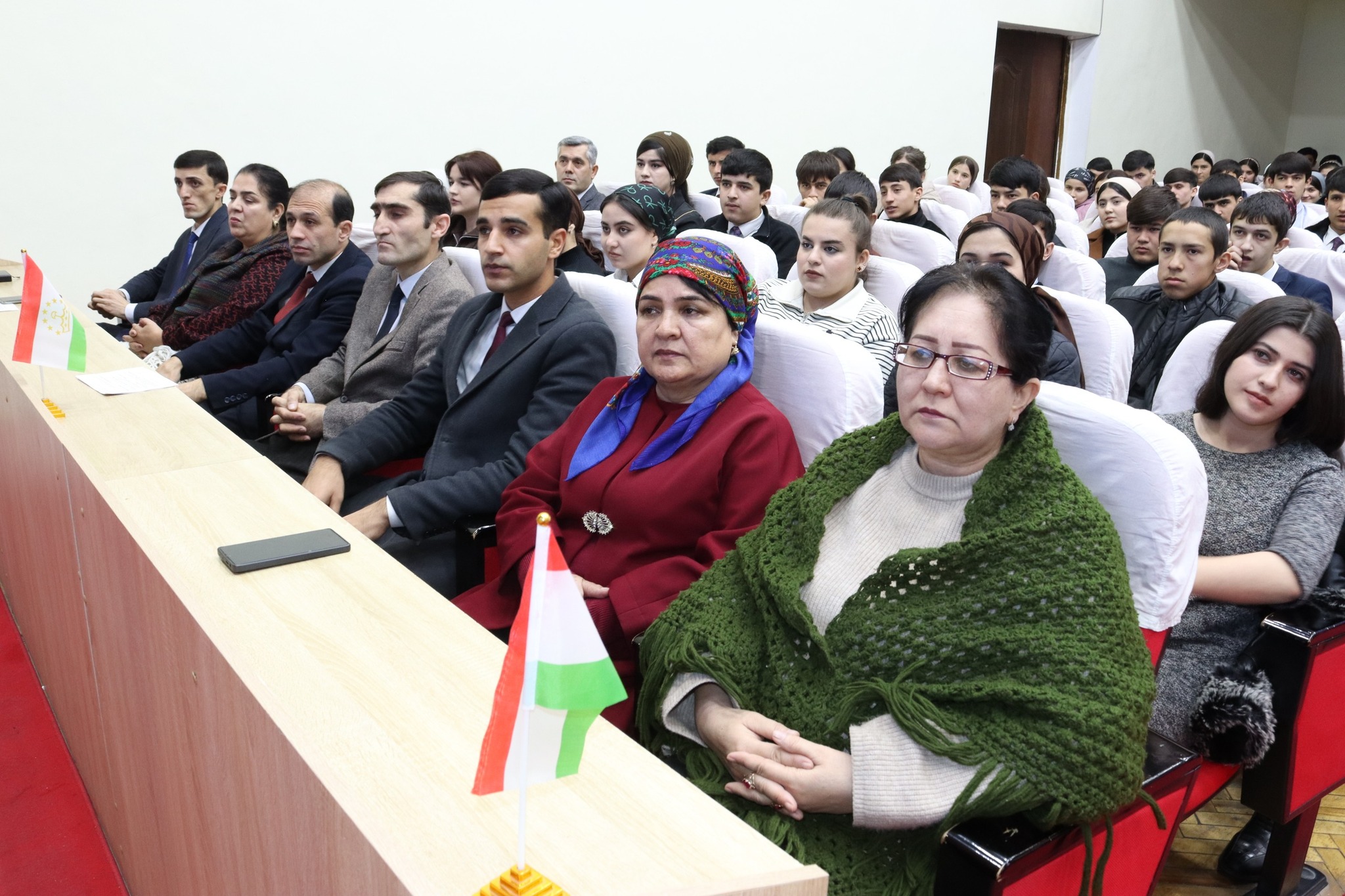
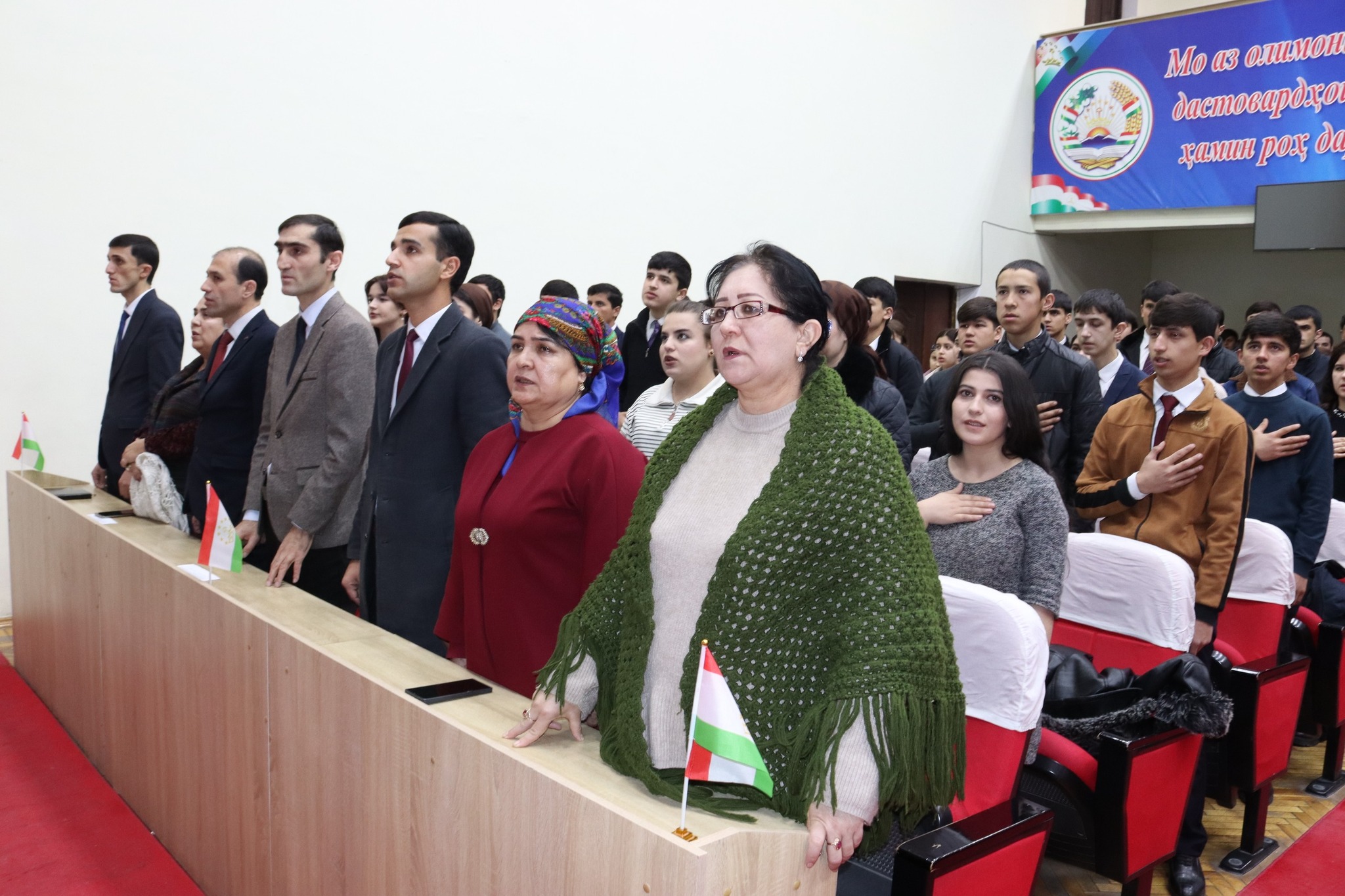
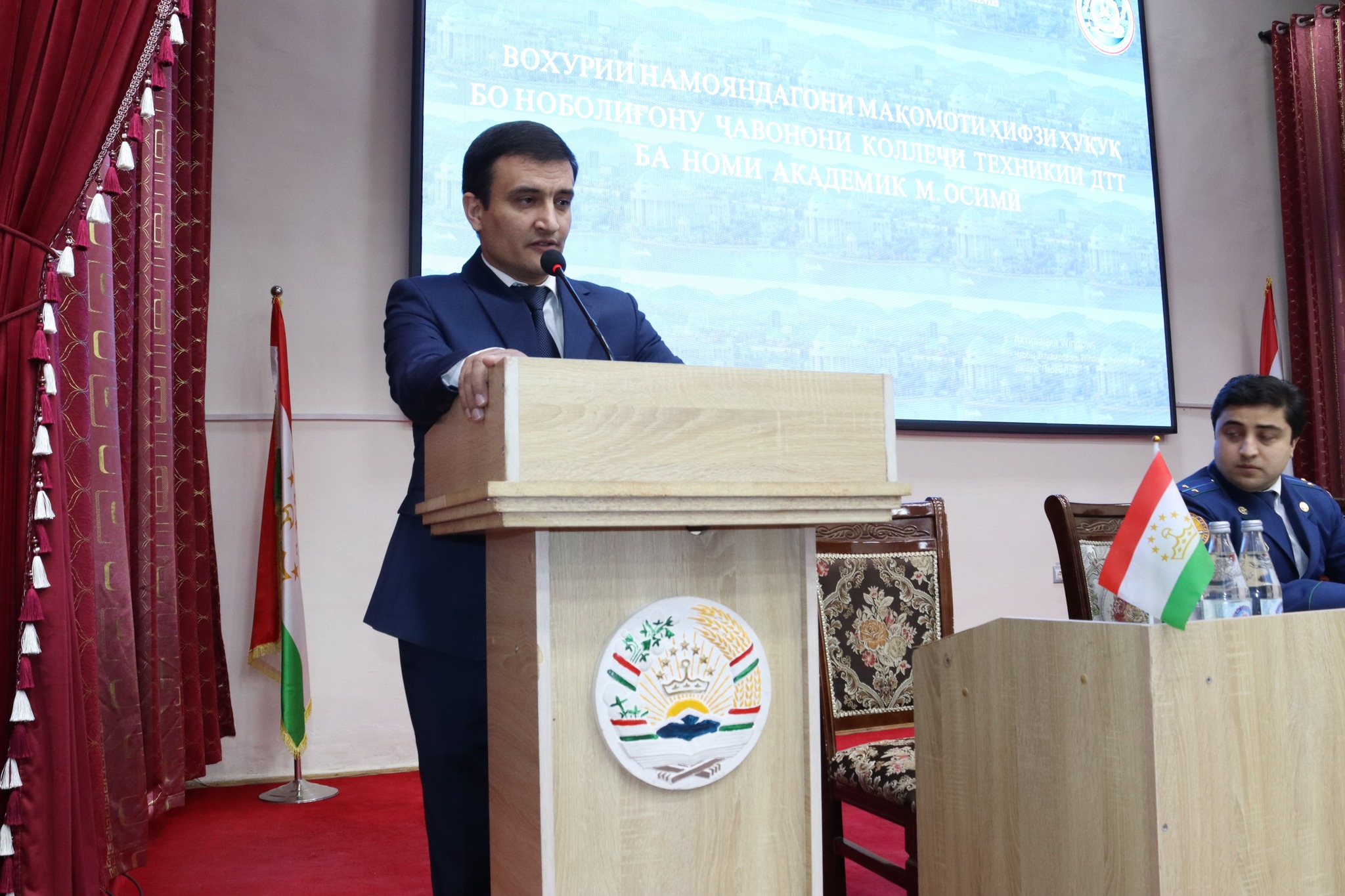
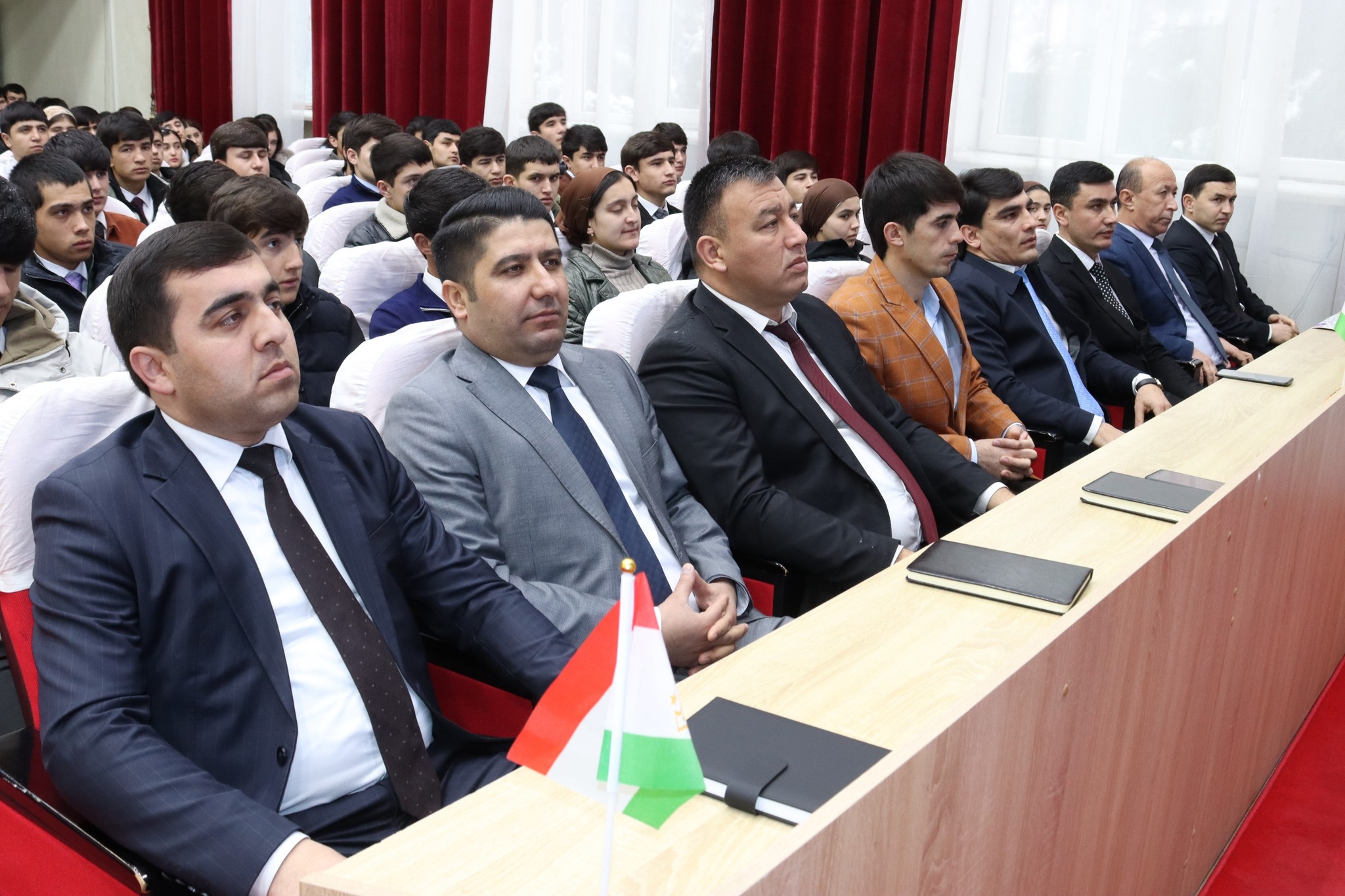
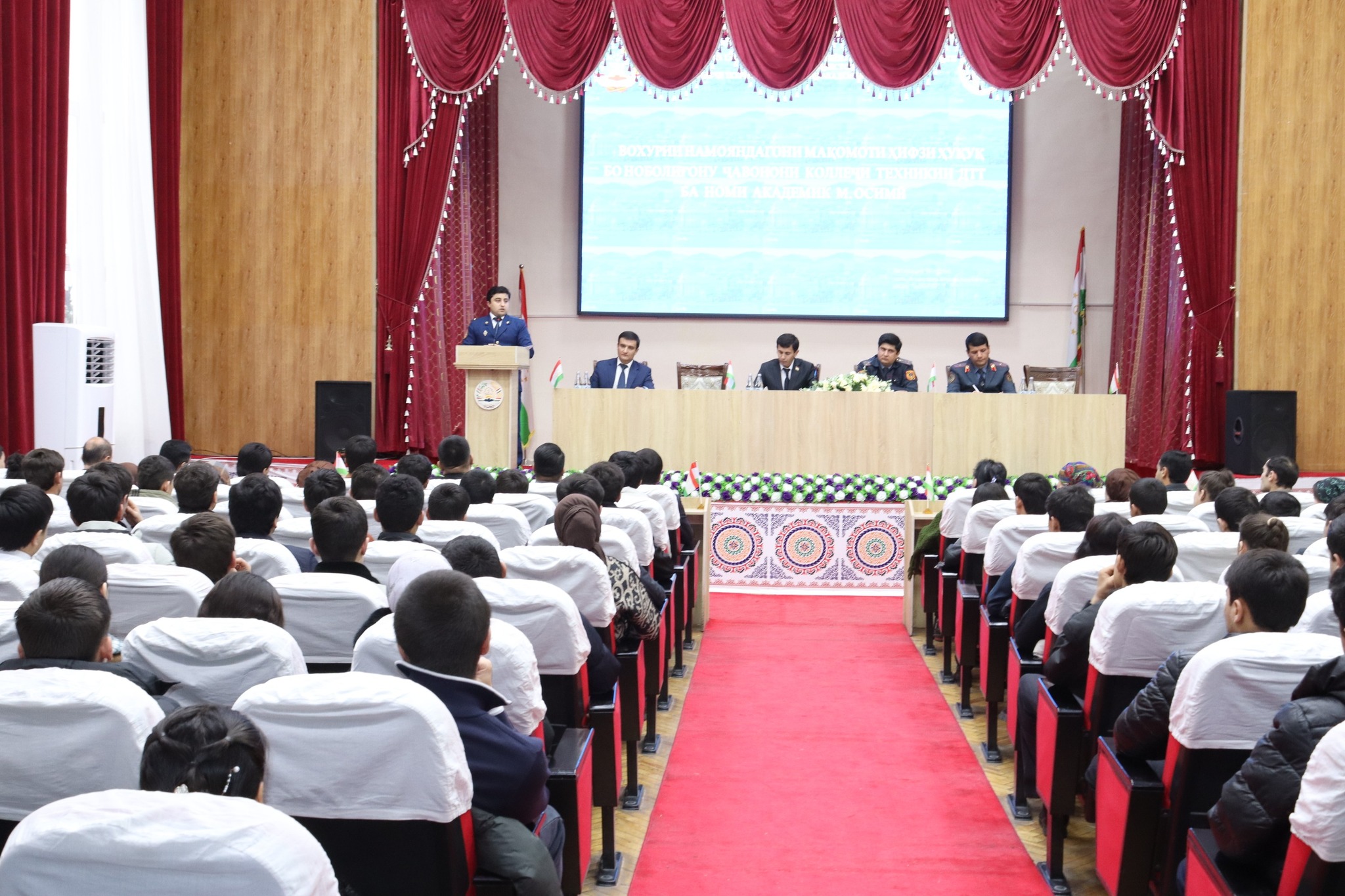
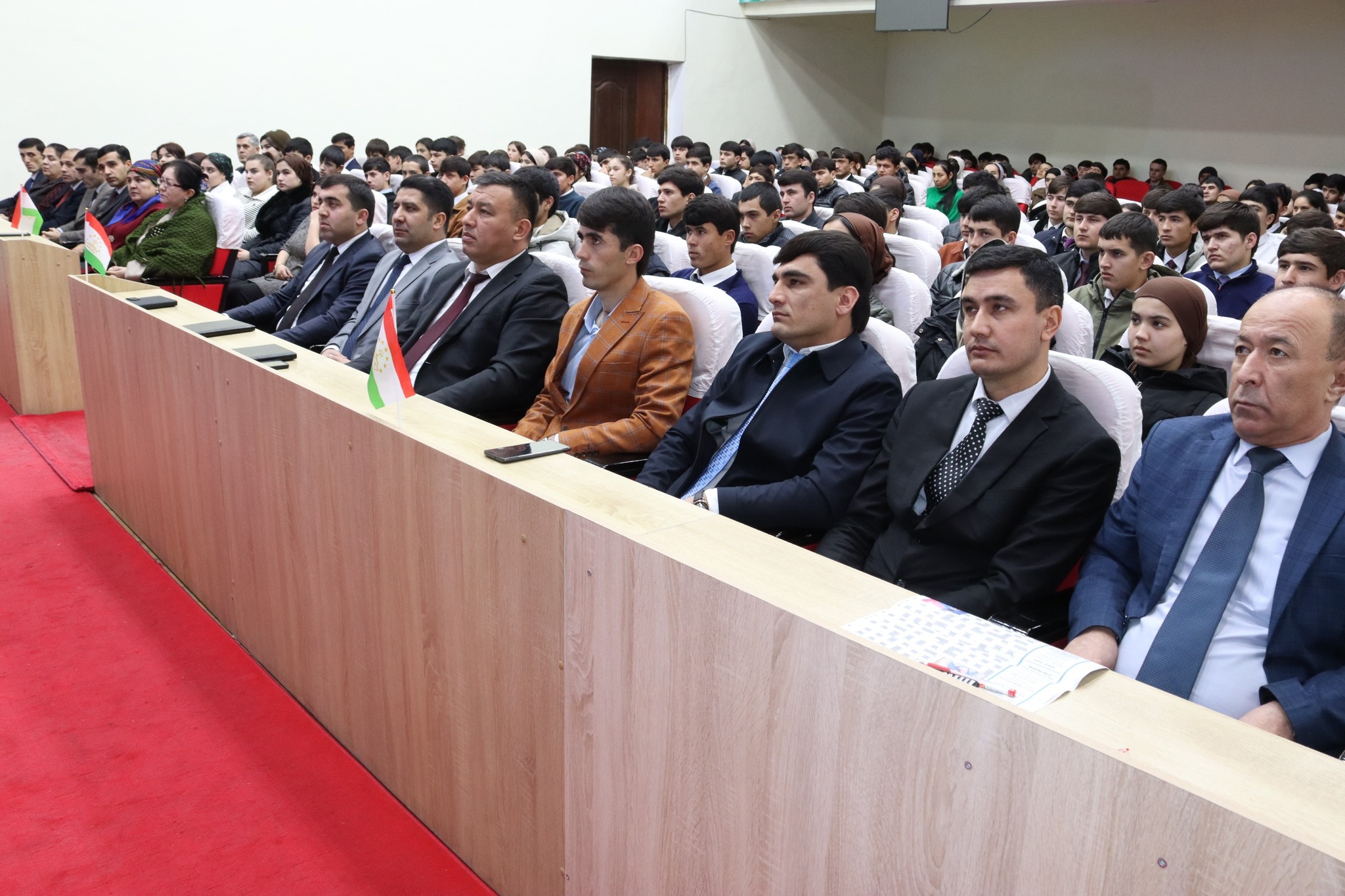
Based on an official letter from the Prosecutor’s Office of the Sino district of Dushanbe, a meeting was held in the assembly hall of the Technical College of TTU named after Academician M. Osimi with representatives of law enforcement agencies and the college’s minors and youth. The meeting focused on compliance with and implementation of the Law of the Republic of Tajikistan “On Freedom of Conscience and Religious Associations.”
Among the guests were Nekruz Hasanzoда — Senior Assistant Prosecutor of the Sino district of Dushanbe; Hokimsho Karomatullozoda — Head of the Department for Prevention among Minors and Youth of Police Department No.1 in Shohmansur district, Captain of Police; Samandar Sobirzoda — Deputy Head of the same department, Major of Police; as well as deputy directors, staff members, teachers, students, and pupils of the Technical College.
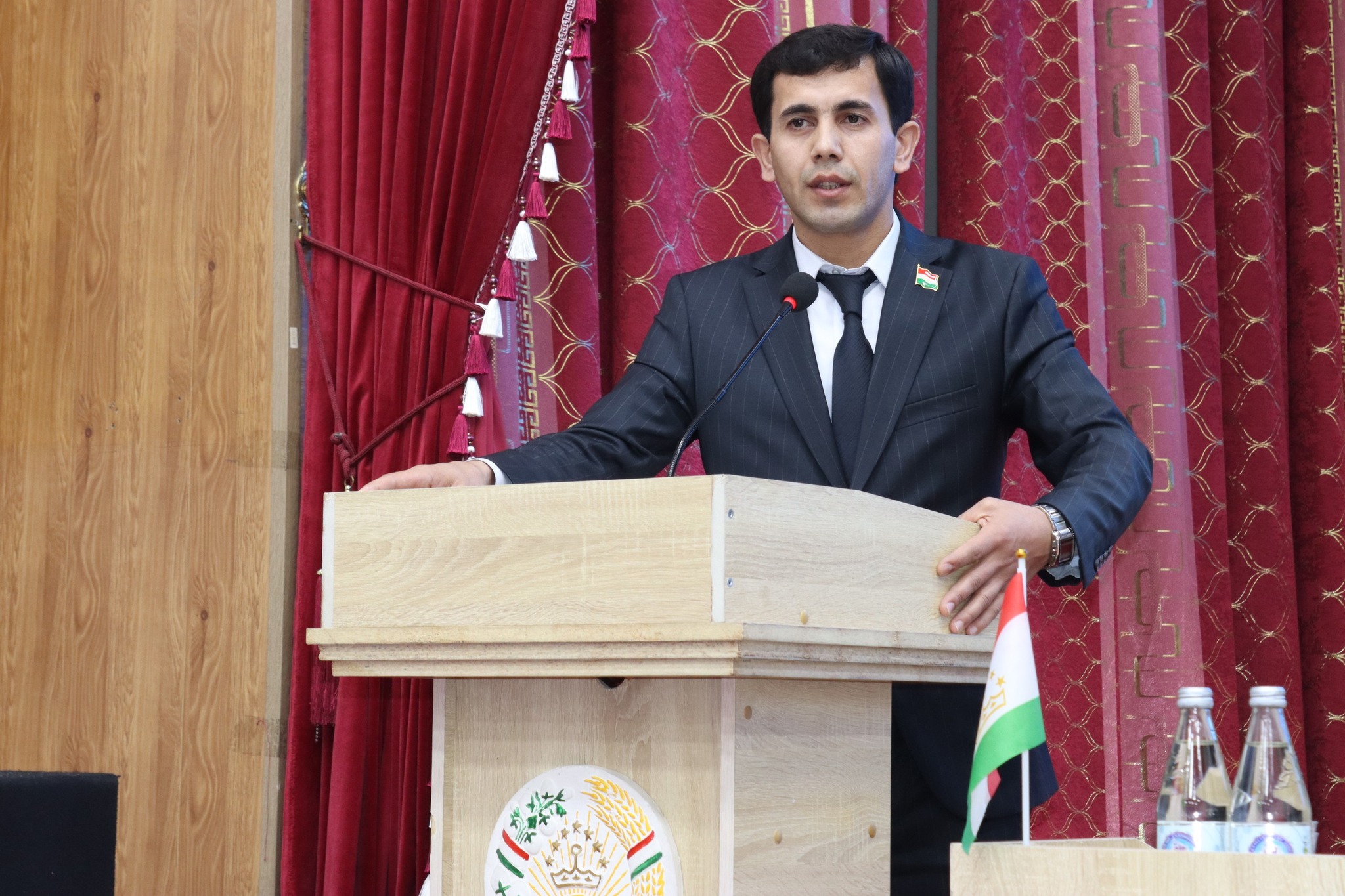
At the beginning, the Deputy Director for Science and Innovation, Candidate of Technical Sciences, Associate Professor Kholiqnazar Azimov introduced the guests and spoke about preventing youth involvement in terrorist and extremist groups. He emphasized that international terrorism and extremism have become global challenges of the modern world. These phenomena cause fear, violence, instability, and destruction.
Terrorism and extremism are considered global threats that can only be countered through international cooperation. Extremist groups often exploit religious beliefs and the insufficient religious knowledge of young people to achieve their harmful objectives. Terrorism poses a serious threat to global security and humanity.
It was noted that tragic events in Afghanistan, Iraq, Syria, and several European countries are primarily linked to anti-state and inhumane propaganda of terrorist organizations, threatening political stability and national security. Combating terrorism and extremism remains a key priority of the Government of the Republic of Tajikistan.
Nekruz Hasanzoда then elaborated on the Law “On Freedom of Conscience and Religious Associations,” explaining that freedom of conscience in its subjective sense refers to the rights and opportunities granted to individuals under the law. It allows citizens to act within the framework of the system “individual — religion — religious association — state.”
Freedom of conscience is studied in various social sciences. Morally, it means acting according to one’s conscience without violating legal and social norms. Sociologically, it is a vital spiritual value of society. Politically, it represents an essential element of democracy. Philosophically, it signifies an individual’s right to determine personal views on justice, good and evil, and religious beliefs.
In conclusion, Deputy Director for Academic Affairs Rahmonali Odinaev spoke about preventing youth involvement in extremist groups. He stressed the importance of raising political, legal, and religious awareness among young people.
The family plays a crucial role in shaping moral values. Educational institutions must instill patriotism, respect for law, and national values. Providing employment opportunities, supporting youth initiatives, and organizing cultural and sports events also help protect young people from extremist influence.
Joint efforts of family, society, and the state can ensure a secure and prosperous future.