In the context of modern societal development, the sphere of education and vocational training serves as the fundamental basis for forming intellectual capacity and human capital, determining the economic, social, and cultural progress of each state. It is precisely within this process that the worldview, mode of thinking, and analytical abilities of the younger generation are shaped. The Founder of Peace and National Unity — the Leader of the Nation, President of the Republic of Tajikistan, His Excellency Emomali Rahmon, places primary importance on the development of education in state policy, considering it a key factor in national progress. In his addresses and speeches, the Head of State consistently emphasizes that the country’s future directly depends on the level of knowledge, education, and scientific thinking of its youth.
In an era of rapid global development and the continuous introduction of new technologies into all spheres of life, the need for in-depth study of exact and modern sciences has become increasingly evident. The Leader of the Nation has repeatedly stressed that sustainable national development is impossible without science, innovation, advanced technologies, and the cultivation of technical thinking. From this perspective, natural sciences, exact sciences, and mathematics have been identified as priority areas of state policy, as they play a decisive role in developing logical, analytical, and technical thinking among young people. Without the formation of such thinking during the educational period, young individuals will be unable to meet the demands of the labor market and economic development in the future.
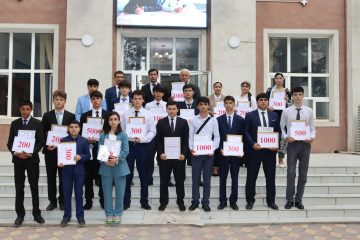
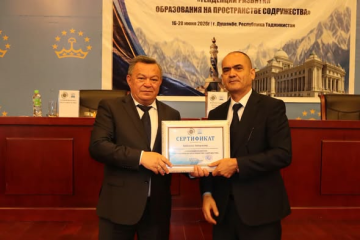
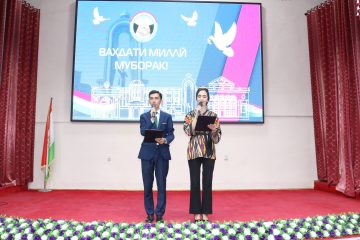
Therefore, the state seeks to increase young people’s interest in scientific learning through the implementation of practical initiatives. One of the most significant of these initiatives is the republican contest “Science – the Light of Enlightenment,” which serves as an effective means of engaging youth in serious scientific study.
As part of this education-oriented policy, the Founder of Peace and National Unity — the Leader of the Nation, President of the Republic of Tajikistan, His Excellency Emomali Rahmon, in his Address to the Majlisi Oli, placed special emphasis on improving the level and quality of teaching the exact sciences and declared the years 2020–2040 as the “Twenty-Year Period for the Study and Development of Natural, Exact, and Mathematical Sciences.” This initiative represents a qualitatively new stage for the education system, as its goal is not only to enhance educational content but also to form a new way of thinking among students.
Within this framework, the republican contest “Science – the Light of Enlightenment” was introduced as one of the mechanisms for implementing this strategic objective. Participation in the contest encourages young people to approach knowledge with a high sense of responsibility and to perceive learning as a serious and meaningful process. During preparation, participants read more, analyze, compare problems, and substantiate their conclusions with scientific arguments, thereby developing scientific thinking. This process lays a solid foundation for informed career choice and future professional activity. Gradually, young people realize that the exact sciences can define their life path and offer real opportunities for advancement, making the connection between science and everyday life clearer and more tangible.
Under such an education-focused policy, the contest “Science – the Light of Enlightenment” gains special significance as a real platform for testing and developing youth potential. It evaluates not only theoretical knowledge but also analytical skills, reasoning ability, and practical application of knowledge. Participation requires a serious and responsible attitude toward learning, as achieving meaningful results demands more than simply mastering textbook material. Participants must work with diverse scientific sources, analyze cause-and-effect relationships, and present their ideas based on scientific evidence.
This mode of activity fosters scientific thinking that differs from mechanical memorization and is grounded in deep, independent understanding. Over time, participants come to realize that science is not a collection of isolated rules but a coherent and systematically evolving body of knowledge. Such understanding is essential for forming a scientific worldview, which enables individuals to objectively assess reality. As a result, young people begin to view science as a tool for understanding the world and solving real-world problems, an attitude that significantly influences their future lives.
One of the key aspects of the contest “Science – the Light of Enlightenment” is its focus on disciplines that are crucial for the country’s economic and industrial development. Natural sciences, exact sciences, and mathematics form the foundation of technological progress, modern industry, and production, and without their advancement, economic competitiveness cannot be achieved. Young people who engage deeply in these disciplines through the contest gradually understand that scientific knowledge can be transformed into professional activity and social benefit. This awareness shapes a conscious approach to education and encourages informed career choices, particularly in engineering, technical, and scientific fields.
Thus, the contest establishes a tangible link between education, vocational training, and the labor market. Society gradually gains specialists who possess not only formal qualifications but also genuine knowledge and skills, which is essential for sustainable national development. The modern economy requires professionals with strong analytical thinking, and the contest makes a significant contribution to preparing such personnel.
During the contest, the role of teachers as mentors and guiding forces becomes increasingly evident, as they are able to direct young people along the correct path of scientific inquiry. Through their experience and expertise, teachers help participants effectively utilize their abilities. The interaction between teachers and students evolves into intellectual collaboration that promotes mutual development. Teachers adopt innovative teaching methods and enhance their professional competence, while students freely express ideas without fear of making mistakes.
Such an educational environment fosters creativity and independence, increases the active use of laboratories, and gives learning a more practical orientation. The impact of the contest extends beyond individual participants to the education system as a whole, gradually improving the quality of education and strengthening a culture of scientific learning.
In today’s world, where national development increasingly depends on the level of scientific thinking among citizens, the importance of contests like “Science – the Light of Enlightenment” becomes even more pronounced. They transform scientific learning from abstract intention into a real process of personal development. Young people raised in such an environment approach life analytically and responsibly, understanding that progress is the result of knowledge, effort, and perseverance. Science becomes not a temporary subject but a genuine value and a foundation for self-improvement.
Thus, the contest “Science – the Light of Enlightenment” is not merely a periodic event but an integral component of state educational policy aimed at strengthening the intellectual foundation of society. It demonstrates to young people that science can be a life path, a profession, and a means of serving the nation. This understanding fosters a sense of responsibility for the country’s future and contributes to the gradual and sustainable development of national intellectual capital.
Kholiqnazar Azimov,
Candidate of Technical Sciences, Associate Professor,
Deputy Director for Science and Innovation,
Technical College of TTU named after Academician M. Osimi